Novitas Leadership Group

Movie-Based Leadership Training That Transforms How Leaders Think

Discover a curated library of powerful films paired with leadership facilitation guides and insights. Each movie is mapped to real-world leadership themes—so you can learn, teach, and lead with confidence.

Movie Overview Guide

Download a free overview of all films to see which movie best supports your leadership goals.

Browse All Resources

12 Angry Men

12 Angry Men takes place entirely in one room over the course of one sweltering afternoon. Twelve jurors must decide the fate of an 18-year-old boy from a slum, accused of murdering his father with a switchblade knife. If convicted, he faces the death penalty. The case seems open-and-shut: two eyewitnesses, a clear motive (years of abuse), and a purchased murder weapon. An initial vote shows 11 jurors ready to convict and go home.
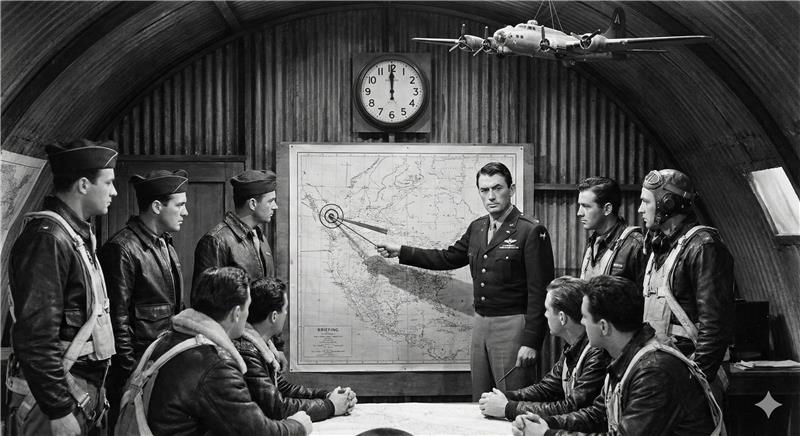
12 O’clock High

12 O'Clock High is set in England, 1942, during World War II's early years when the U.S. Army Air Forces conducted daylight bombing raids over Nazi-occupied Europe. These missions had catastrophic casualty rates—some groups lost 25-30% of crews per mission. The film focuses on the 918th Bombardment Group, which has become "hard luck" after months of losses, failed missions, and accumulated trauma.

Apollo 13

In an era where leadership development commands billions in corporate training budgets, organizations are discovering an unexpectedly powerful tool hiding in plain sight: movies. Far from mere entertainment, films represent one of the most effective vehicles for teaching complex leadership principles, fostering emotional intelligence, and creating lasting behavioral change.

Galadiator

Gladiator is set in 180 AD during the twilight of Rome's "Golden Age" under the philosopher-emperor Marcus Aurelius. The film opens with General Maximus leading Roman legions to victory in Germania, completing Marcus Aurelius's decades-long campaign to secure the empire's borders. Maximus is beloved by his troops, respected by the emperor, and yearns only to return home to his wife and son in Spain to farm his land.

Good Will Hunting

Good Will Hunting is set in Boston, primarily in South Boston ("Southie"), a working-class Irish neighborhood where Will Hunting was born and raised in foster care. Will is a 20-year-old janitor at MIT who spends his free time with his construction-worker friends, drinking beer, getting into fights, and hiding his extraordinary intellect from everyone except his closest friend, Chuckie.

HIdden Figures

Hidden Figures tells the true story of three Black women mathematicians who were essential to NASA's early space program during the Space Race of the 1960s. Set between 1961-1962, the film captures a pivotal moment when America competed with the Soviet Union for space supremacy while Black Americans fought for civil rights at home.

INVICTUS

Invictus is set in 1995, just one year after Nelson Mandela became South Africa's first Black president following the end of apartheid. The country teeters on the edge of chaos, decades of brutal racial segregation have left deep wounds, economic inequality, and mutual distrust between Black and white South Africans. Many in Mandela's African National Congress (ANC) party want retribution against their former oppressors. White South Africans fear losing their jobs, homes, and safety.

Lincoln

Lincoln focuses on the final four months of Abraham Lincoln's life (January-April 1865) as he fights to pass the 13th Amendment to the U.S. Constitution, which would permanently abolish slavery nationwide. The film is based on Doris Kearns Goodwin's book Team of Rivals and captures a moment when military victory in the Civil War is near but not certain, and Lincoln faces a critical choice: end the war through negotiation (which would likely preserve slavery in border states) or continue fighting until he can pass the amendment.

Money Ball

Moneyball is based on Michael Lewis's 2003 book about Billy Beane's revolutionary approach to building a competitive baseball team with one of the sport's smallest budgets. Set primarily in 2002, the film captures a moment when baseball—a sport steeped in tradition and conventional wisdom—confronted data analytics that challenged everything scouts and managers believed.
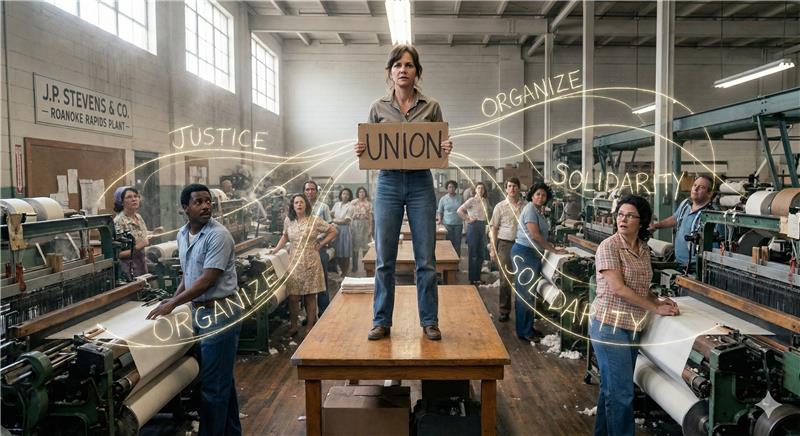
Norma Rae

Norma Rae is based on the true story of Crystal Lee Sutton, a textile worker who helped unionize the J.P. Stevens textile mill in Roanoke Rapids, North Carolina, in the 1970s. The film captures the American South's labor struggles during an era when textile mills dominated local economies, paying poverty wages while demanding dangerous working conditions.

Pursuit of Happyness

The Pursuit of Happyness is based on the true story of Chris Gardner, who in the early 1980s went from homeless and sleeping in San Francisco subway bathrooms to becoming a multimillionaire stockbroker and, eventually, a successful entrepreneur and motivational speaker. The film opens with Chris struggling to sell portable bone density scanners, medical equipment that is expensive, slightly obsolete, and nearly impossible to move. His investment in scanner inventory has drained his savings, putting immense strain on his marriage.

Remember the Titans

Remember the Titans is based on the true story of the 1971 T.C. Williams High School football team in Alexandria, Virginia, during the first year of court-ordered school integration. The film captures a moment when America's racial wounds were raw—the Civil Rights Act was only seven years old, and many communities violently resisted integration. The story begins in summer 1971 when Alexandria's school board merges three high schools (one predominantly Black, two white) into T.C. Williams.
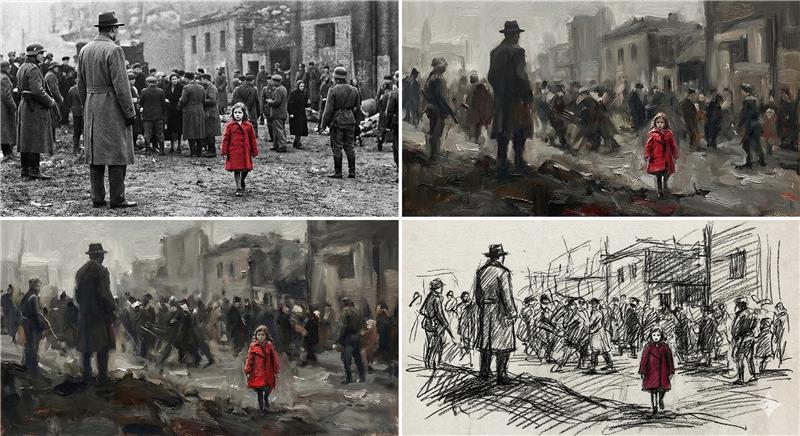
Schindlers List

Schindler's List is based on the true story of Oskar Schindler, a Czech-German industrialist who saved approximately 1,200 Jews during the Holocaust. Set primarily between 1939 and 1945, the film follows Schindler's transformation from opportunistic war profiteer to heroic savior. When the film opens, Schindler is a bon vivant, a member of the Nazi party seeking to profit from World War II by opening an enamelware factory in Krakow, Poland.

Download Your Free Leadership Guide

Download our comprehensive leadership guide from Novitas Leadership Group. This resources includes discussion points and actionable exercises for your team.

  • Complete facilitation guide
  • Discussion questions
  • Leadership principles
  • Actionable exercises

Download Now

Download Started!

Thank you! Your leadership guide is now downloading. We have received your details at Tiny Explorers.

Frequently Asked Questions

Simply fill out the form above with your name and email address. You'll receive immediate access to download the free "Invictus" leadership facilitation guide in PDF format. You'll also be added to our newsletter for additional free resources.

We accept all major credit cards (Visa, MasterCard, American Express), PayPal, and Apple Pay for premium guide purchases. All transactions are secured with 256-bit SSL encryption.

We offer a 30-day money-back guarantee on all premium guide purchases. If you're not satisfied with your purchase for any reason, simply email us within 30 days for a full refund. Digital downloads of free resources are non-refundable as they're provided at no cost.

Yes! Our guides are specifically designed for corporate training, leadership development programs, team building workshops, and educational settings. Each guide includes facilitation instructions that make them easy to implement in group settings.

We add New movies added periodically, along with regular articles and facilitation tools. Subscribers to our newsletter receive early access to new resources and exclusive discounts on premium guides.

Ready to Transform Your Leadership Approach?

Join thousands of organizations who have discovered the power of movie-based leadership training. Access our comprehensive library of leadership facilitation guides or schedule a consultation for innovative leadership development tailored to your needs.

Scroll to Top

12 Angry Men: Leadership, Integrity, and Principled Dissent

  • Film-based learning increases empathy by 34%
    Leaders feel the weight of bias, pressure, and ethics.

  • Narrative learning boosts retention up to 70%
    Juror #8 becomes a lasting mental model for ethical leadership.

  • Psychological safety reduces errors by 27%
    Respectful dissent improves decision quality.

  • Bias awareness is critical to integrity
    Unexamined emotions corrupt “objective” decisions.

  • Process integrity protects outcomes
    Slowing high-stakes decisions prevents irreversible mistakes.

  • Moral courage reshapes groups
    One principled voice can elevate the whole room.

12 O’Clock High: Leadership, Motivation, and the Cost of Command

  • Film-based learning increases empathy by 34%
    Leaders emotionally experience pressure, fear, and responsibility.

  • Narrative learning improves retention up to 70%
    Savage vs Davenport becomes a lasting leadership mental model.

  • High standards + real care transform failing teams
    Accountability restores dignity and performance.

  • Identity drives outcomes
    Changing how teams see themselves changes results.

  • Leadership burnout reduces effectiveness
    Savage’s collapse reflects real research on executive burnout.

Apollo 13: How Movies Build Crisis Leadership Skills

  • Experiential learning improves retention (20–30%)
    Apollo 13 immerses leaders in real-time crisis decision-making.

  • Narrative learning increases retention by up to 70%
    The story embeds leadership principles into memorable mental models.

  • Film-based learning boosts empathy by 34%
    Trust between astronauts and Mission Control demonstrates empathy-driven leadership.

  • Critical thinking improves by 28% through film cases
    Leaders learn to break complex problems into solvable components.

  • High engagement drives deeper learning
    87% of L&D professionals confirm multimedia learning outperforms traditional methods.

  • Crisis decisions favor workable solutions over perfect ones
    Apollo 13 demonstrates “work the problem” thinking under pressure.

Gladiator: How Movies Demonstrate Leadership Impact

  • Trauma can forge stronger leaders
    Research shows 53–89% of trauma survivors experience post-traumatic growth.
    Maximus transforms personal loss into purpose-driven leadership.

  • Purpose sustains leadership through suffering
    Like Mandela and Malala, Maximus channels tragedy into service beyond self.

  • Moral resilience is possible in corrupt systems
    Clear ethical boundaries prevent “ethical fading” even under extreme pressure.

  • True authority comes from character, not position
    Maximus leads without rank; Commodus fails despite power.

  • Influence exists even without formal authority
    Reputation, trust, and alliances can outweigh titles

Cinematic Leadership Learning: Good Will Hunting

  • Empathy Unlocks Potential

    • Will rejects intellectual opportunities from Professor Lambeau but responds to Sean’s relational, empathetic approach.

    • Insight: Leaders who see employees as humans first, rather than “assets,” enable true growth.

  • Healing Precedes Development

    • Will’s trauma prevents him from achieving potential; emotional support unlocks his growth.

    • Insight: Addressing personal/psychological barriers is crucial before expecting performance improvements.

  • Authentic Vulnerability Creates Safety

    • Sean shares personal struggles and imperfections, creating trust and psychological safety.

    • Data Point: Organizations with empathetic, vulnerable leaders show 27% higher performance and 40% lower turnover (Google Project Aristotle).

  • Empathy vs. Authority

    • Lambeau offers technical opportunities; Sean offers emotional connection.

    • Outcome: Emotional resonance drives engagement and actionable transformation more than authority alone.

  • Letting Go Enables Growth

    • Chuckie encourages Will to pursue opportunities beyond South Boston.

    • Insight: True leadership sometimes means enabling departures to support long-term potent

Hidden Figures & Leadership Impact

  • Visibility Matters: Talent alone isn’t enough; leaders must advocate and create pathways for recognition

  • Proactive Resilience: Anticipate changes and position yourself/teams to meet future challenges

  • Collective Advancement: Elevate your team while pursuing personal growth

  • Allyship & Barrier Removal: Use positional power to dismantle structural obstacles and enable performance

  • Systemic Awareness: Celebrate resilience while actively working to remove unjust systems

Invictus: The Impact of Movies on Leadership Development

  • Respect reduces resistance
    → Mandela shows that respect and reconciliation are more effective than punishment in divided environments.

  • Symbols influence identity and behavior
    → The Springbok jersey becomes a leadership tool, proving that symbols can unite people faster than policies.

  • Vision requires patience
    → Transformational leadership demands long-term thinking, even under pressure for immediate action.

  • Empowerment multiplies leadership capacity
    → By empowering François Pienaar, Mandela scales leadership beyond himself.

  • Personal behavior shapes organizational culture
    → Mandela’s forgiveness sets the tone for national and organizational reconciliation.

  • Moral authority builds lasting trust
    → Leadership rooted in integrity and humility earns commitment, not compliance.

Visionary Leadership through Film – Lincoln (2012)

  • Ideals Require Practical Politics

    • Moral clarity must be combined with strategic compromise to achieve meaningful results.

    • Lincoln achieved abolition through coalition-building, bribery, and strategic persuasion without compromising the principle (end slavery).

  • Strategic Timing Matters

    • Acting on 70% certainty can be better than waiting for perfect conditions.

    • Leaders often face trade-offs between immediate outcomes and long-term objectives.

  • Coalition-Building & Stakeholder Understanding

    • Different stakeholders need different appeals: justice, peace, patronage, or practical interest.

    • Tailoring approaches increases chances of achieving organizational goals.

  • Ethics & the “Dirty Hands” Problem

    • Sometimes morally questionable actions (lying, manipulation) are used to achieve higher ethical outcomes.

    • Leaders must weigh means vs. ends, clarifying ethical boundaries in advance.

  • Storytelling Persuades Beyond Logic

    • Lincoln uses parables, anecdotes, and humor to influence outcomes, demonstrating the power of narrative leadership.

Moneyball: Visionary Leadership Through Data and Courage

  • Visionary leaders challenge “how it’s always been done”

  • Data reveals hidden value others ignore

  • Innovation threatens identity, not just processes

  • Cultural resistance is the real enemy—not lack of evidence

  • Leaders must use authority to protect disruption

  • True success is changing systems, not winning once

Norma Rae: Grassroots Leadership and the Power of Moral Courage

  • Film-based learning increases empathy by 34%
    Leaders emotionally experience injustice and human cost.

  • Narrative learning improves retention up to 70%
    Norma Rae’s story becomes a lasting leadership mental model.

  • Critical thinking improves by 28% through film cases
    Leaders see how systems resist change—and how to confront them.

  • Collective action creates real power
    Individual courage sparks movements; systems change only when many act.

  • Ordinary people can become leaders
    Leadership emerges from necessity, not credentials or titles.

THE PURSUIT OF HAPPINESS

  • Resilience & Empathy: UNC study (2019) – film-based leadership training improved empathy scores 34% vs 12% in traditional training.

  • Knowledge Retention: MIT Sloan – narrative-based learning increased knowledge retention by 65–70% over fact-based presentations.

  • Critical Thinking: Journal of Management Education – film-based case studies improved critical thinking 28% vs written cases alone.

  • Engagement: Corporate Executive Board survey – 87% of L&D professionals report multimedia learning is more engaging than traditional methods.

  • Grit & Long-term Success: Angela Duckworth – endurance and perseverance predict success better than talent or IQ. Chris Gardner exemplifies extraordinary grit.

  • Marginal Gains: British Cycling study – small 1% improvements across multiple areas can compound to 270% overall performance gain, similar to Chris’s micro-efficiency strategies (saving 6 seconds per call).

  • Economic Context: Raj Chetty – child born in bottom 20% income bracket has 7.5% chance of reaching top 20%; Chris Gardner represents this exceptional outcome.

Remember the Titans: How Movies Teach Leadership, Unity, and Motivation

  • Film-based learning increases empathy by 34%
    Leaders emotionally experience division, fear, and reconciliation.

  • Narrative learning boosts retention up to 70%
    The Titans’ journey becomes a lasting leadership mental model.

  • Superordinate goals unlock diverse team performance
    Winning makes cooperation unavoidable and prejudice costly.

  • Integration requires structure and accountability
    Proximity alone fails—leaders must design cooperation.

  • Shared hardship builds trust faster than dialogue alone
    Adversity creates identity, commitment, and unity.

  • Leader behavior shapes culture faster than policy
    Modeling inclusion accelerates transformation.

SCHINDLER’S LIST Extending Leadership Learning Beyond the Film

  • Stories reduce moral distance
    The Danger of a Single Story reinforces that leadership failure often begins with simplification and stereotyping.

  • Behind-the-scenes reflection builds ethical awareness
    The Making of a Masterpiece shows that leadership involves responsibility not only for actions, but for what we choose to show—or hide.

  • First-person testimony creates obligation
    Holocaust survivor videos move learning from analysis to moral accountability by humanizing consequences.

  • Leadership includes bearing witness
    Spielberg’s reflections demonstrate that leadership sometimes means telling uncomfortable truths despite resistance.